Tuesday, November 28, 2006

Proud to be a UCCer

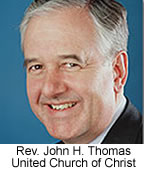
John Thomas, the President of the UCC, wrote a brilliant mini-history of the United Church of Christ. I found it by checking out the UCC's blog over at i.ucc.org. He also wrote to remind us that, in his opinion, "it is better to be a divided church who stands for something than be a united church that stands for nothing." As the UCC is gearing up to celebrate our 50th Anniversary of the merger of the Congregational Christian Church and the Evangelical and Reform Churches, Thomas writes about that history as well as about what the UCC has stood for, both historically and more recently.

I would encourage you to go pour yourself a cup of coffee, take off your shoes, and scoot up to your monitor for a wonderful and encouraging read. It'll be one of those things that may make you say to yourself when you're finished, "Gee, that was really inspiring; I am really proud to be a UCCer."

Monday, November 27, 2006

Advent 1 is Coming Up

Beginning next Sunday, we will begin our new season of the liturgical year with the observance of Advent 1. Last Sunday, November 26 finalized the end of our past liturgical year culminating with the celebration of Christ the King Sunday. Next week we begin all over again the story of Jesus as both our Savior and the Christ.

Did you know that when we follow the Revised Common Lectionary that if we remain true to its Scriptural suggestions, we will preach and read through the Bible every 3 years? This is why many churches and denominations use the lectionary: to help educate our church members and help them become biblically literate.

Another way we help you to learn the Bible is to observe the various cycles in the church year. You will know when we are in a different cycle by the color of the altar and pastoral vestments. On Sundays, we have certain colors displayed on the altar, the pulpit, and the lectionary stand. And, you will notice that I wear a particular colored stole that usually matches the colors you see elsewhere. Each color represents a different cycle.

Here are those colors. There is blue, which is a new color for the season of Advent (although many folks still use the color purple), Purple for the season of Lent, White for Easter and special occasions in which we celebrate weddings or Christ the King Sunday. The color red for Palm Sunday, the Passion of Christ, the day of Pentecost and for special occasions in which God either comes down in a dramatic way or for denominational occasions such as an ordination. We use the color green for the season of Pentecost and for Ordinary Time (the time between Pentecost and towards the end of the liturgical year when nothing fancy is going on. We use the color black for Ash Wednesday (not all UCCers celebrate Ash Wednesday but we do) and Good Friday.

As we enter the season of Advent, you will notice something different all through the 4 Sundays in Advent. We will be doing something different in the services and I will speak more about that next week after we have observed the Lord's Supper. And, during the Lord's Supper we'll be doing so in a unique way that we observed last month when we sang the liturgical responses rather than only reading them as we normally do.

I am looking forward to the season of Advent and beginning again the joy of experiencing the Christian journey of faith with you.

Another Conversation about Branding

In a continuing conversation many of us are having at church, the idea of branding our church has been a recurrent theme. Having now established our identity missional statement, we now move forward in communicating that statement in our ministry activities. The idea, of course, is to use the statement as a way to 'stay the course' in our pursuit of finding ways to reach out to church-seekers and also as a way to 'remind us all' why we are here.

In such a conversation, branding becomes an underlying theme. And with branding, we should keep asking ourselves: Who do people think we are? Are we remaining true to who we say we are? And while these are thoughtful and good questions to keep asking ourselves, we also need to be careful when asking these questions. In our desire to remain true to our identity, is it possible to lose the ability and elasticity to change when necessary?

In a post written about the struggles with brand marketing that Starbucks Coffee is having, one writer talks about the dangers of branding without entirely chucking the entire concept. Go over and read the post and let us ask ourselves how branding can help us without being tied to it.

Monday, November 20, 2006

The Results of the Identity Survey

The Good News Team (GNT) has done it! After examining and reading all of the responses to the congregation questionnaire, they have determined the answers to the questions: Who are We? Why are We Here? and Who is Our Neighbor?

Here is the summary statement of those three questions:

We are a loving, open-minded, caring, dedicated church on a journey to learn, laugh, discover, grow, worship, and praise God together. We invite anyone who needs help on life's journey to experience our hospitality.

As many of you know, the GNT has been working diligently with these questions in order for them to ensure that when we advertise ourselves to our various communities, we are who we say we are. This idea stems from the understanding of the philosophies of branding and marketing.

When it comes to branding and marketing, we are not negating the power and authority of the Gospel, rather we are distinguishing ourselves for the benefit of our prospective member. In this way, we hope that a prospective member will have an understanding of our identity and will be able to make an informed decision as to whether or not their gifts and talents will make a good fit with us. Given that there are many churches that a prospective member may choose to attend, branding and marketing our church as honestly and sincerely as possible will help grow our church accordingly.

When you see a member of the Good News Team, be sure and thank them for the dedication and hard work.

Monday, November 13, 2006

Nervous Pastors

I would like to offer a special thanks to my friend Paul who directed me to a post from Mark Driscoll regarding his protective guidelines for a pastor. Driscoll, a post-emergent pastor, wrote his post in response to the Ted Haggard mess and writes to warn all other pastor's to be careful to protect themselves from sexual temptation. Go here to read Driscoll's list. You'll need to scroll down a page.

His list is both frightening, kinda freaky, and yet, clear that we all need to be careful when it comes to temptation. Admittedly, I was aghast at how he looks at women, as if they are all seductive vixens. And, blaming Haggard's wife for Haggard's fall is one example of how scapegoating only serves to strengthen an argument from the person talking about it and has next to nothing to do with the real issue of the person or thing that person is referencing.

Okay, so all that aside, take a look at Driscoll's Safeguards and let me know what you think.

What the Bleep?

Last night, we had around 30 folks to watch the movie, 'What the Bleep Do We Know?' The movie, part existentialism, part spirituality, part quantum physics, sought to help us ask ourselves questions about who we are and why we are here.

The movie elicited some interesting responses. On the whole, most folks fell into the categories of either they liked it or they didn't.

I enjoyed the movie because it opened up to us an awareness of the power of our thought-processes and how we can become stuck in our addictive emotional behaviors. I also enjoyed the way in which the ideas of interconnectivity were explored.

Unfortunately, I had forgotten about a couple of racy scenes used to explain the power of sex when it comes to the receptive proteins in our brain. There was a couple of times that I was embarrassed for some of the parents who had brought their pre-teen kids to the movie. Actually, I was horrified. The parents forgave me- but I can only imagine the conversations those parents had when they got home.

All in all though, the movie was thought-provoking for many.

Our next movie will be showing The DaVinci Code. We'll probably be viewing it in January with a discussion and food/refreshments to follow.

Thursday, November 02, 2006

Contemplating a New Sacrament

Last week at the Fosdick Convocation, I had an epiphany--well, sort of. Maybe it was more of a lightbulb flashing brightly above my head. I had listened to one of the lectures about the parable of the Sheep and the Goats. The parable goes like this, it is from the Book of Matthew:

Matthew 25:31-46

"When the Son of Man comes in his glory, and all the angels with him, he will sit on his throne in heavenly glory. All the nations will be gathered before him, and he will separate the people one from another as a shepherd separates the sheep from the goats. He will put the sheep on his right and the goats on his left.

"Then the King will say to those on his right, 'Come, you who are blessed by my Father; take your inheritance, the kingdom prepared for you since the creation of the world. For I was hungry and you gave me something to eat, I was thirsty and you gave me something to drink, I was a stranger and you invited me in, I needed clothes and you clothed me, I was sick and you looked after me, I was in prison and you came to visit me.'

"Then the righteous will answer him, 'Lord, when did we see you hungry and feed you, or thirsty and give you something to drink? When did we see you a stranger and invite you in, or needing clothes and clothe you? When did we see you sick or in prison and go to visit you?'

"The King will reply, 'I tell you the truth, whatever you did for one of the least of these brothers of mine, you did for me.'

"Then he will say to those on his left, 'Depart from me, you who are cursed, into the eternal fire prepared for the devil and his angels. For I was hungry and you gave me nothing to eat, I was thirsty and you gave me nothing to drink, I was a stranger and you did not invite me in, I needed clothes and you did not clothe me, I was sick and in prison and you did not look after me.'

"They also will answer, 'Lord, when did we see you hungry or thirsty or a stranger or needing clothes or sick or in prison, and did not help you?'

"He will reply, 'I tell you the truth, whatever you did not do for one of the least of these, you did not do for me.'

"Then they will go away to eternal punishment, but the righteous to eternal life."

***

Hearing this parable and the subsequent sermon, my mind found itself wandering over to the Roman Catholics who teach in transubstantiation, the blessing that turns the bread and wine into the actual body and blood of Christ during their Holy Communion. "This is my body..." they say and mean quite literally. I remember asking a priest friend of mine why they take Jesus' words so literally when it was "obviously" a symbolic act. My priest friend said, "Bo, Jesus said, 'This IS my body,' I don't see why you think that is symbolic."

My conversation with my priest friend happened almost a decade ago and I was thinking about that when I read and heard the parable of the Sheep and the Goats when Jesus said, "In as much as you do it to the least of these my brothers and sisters, you do it to me." How much more, I thought, could Jesus' words be more real and non-symbolic that reading this parable.

As a pastor in the United Church of Christ, we do not believe in transubstantiation during the communion celebration but many of us do believe in a real presence. Borrowing heavily from the Lutherans, we see a mystery occur when God is present during the communion celebration. But our ancestors of the faith certainly believed communion meant something much more and made it one of the sacraments of the church.

At the Council of Trent, back in 1545, a conversation and decisions were made limiting what the Church would allow as its Sacraments. Prior to that meeting, there were many sacraments. Worrying that putting too much faith into a sacrament might negate the grace involved, the Catholic Church decided that there would only be 7 of them: Baptism, Confirmation, Penance, The Eucharist, Extreme Unction, Orders (the call of the clergy), and Matrimony.

Most Protestant Churches, however, have rejected all but two: baptism and Holy Communion (the Eurcharist). The idea is that in these two situations, it can be proved that they were used by Jesus and the early church aside from later church validation.

Understanding the sacraments and their history can be a tedious study--one that I plan to engage at great length. But in spite of all that has been considered a sacrament, I am surprised that one element has been missing from the entire history for its consideration: the Sacrament for the Poor (and the poor in Spirit). How come? Obviously the care of the poor, the lonely, the imprisoned, the naked and the homeless was of primary concern for Jesus. And we know the early church took this very seriously too. How come our identity as Christians has not been tied to this most important and defining characteristic that Jesus identified as essential to the life of the Christian?

One argument may lie in the challenge that if the care of the poor is considered a 'work of faith' then what about grace? I have read about this and would love to link you to a story of it but the linking functions with blogger is down at the moment. I'll post a link in a few days.

But it is arguments such as this that highlight a point: sometimes we get so concerned with theology that we miss the point altogether. It is one thing to hold care of the poor as an important task of the church--it is something else entirely when we say that the care for the poor defines a Christian. If we say the latter, surely we run into theological conundrums-- and yet, how can we miss Jesus' point-blank declaration that if we don't care for the poor, we 1) don't care for him, and 2) we'll go to hell. You can't get any clearer than that.

My personal opinion about Jesus and the church isn't necessarily a neat one. Jesus was often frustrated with the pious and devoutly religious and I wonder if he had intended for the early church to become so rigid in their theology. I think the theology of Paul is a lot more complicated than what Jesus had in mind. Paul seems concerned that our understanding of God fit into a nice and neat systematic theology textbook--whereas Jesus was more concerned with how we live out our faith. Often, Jesus called those who put theology above Christian practice hypocrites. And yet, Jesus obviously meant for the church to survive and thrive.

Where did we go wrong?

In the coming weeks, I will be writing my thoughts about sacraments and a radical idea to make and create a Sacrament to the Poor (to also include the poor in Spirit). I am currently in talks with my Conference Minister in Baltimore as well as a friend who works as a Worship Team member in the Cleveland office, the home of our denomination. Considering how to move forward with this consideration will include many conversations--here, in the pulpit, and elsewhere.

I invite you, dear reader, to join with me on this journey. Let us talk, ask, and get acquainted with our faith tradition--and see if in this way, we might ask ourselves that reoccuring question that each new member of the UCC is encouraged to do: to reinterpret what in means to be a Christian in this and every generation.
Monday, October 30, 2006

The Phoenix Affirmations

In light of the political arena where in the past there have been many conservative voices, more and more progressive Christians are beginning to find their own voice. One such group of progressive and moderate Christians have joined together to affirm their beliefs in what they call The Phoenix Affirmations. Here is what they have to say:

As people who are joyfully and unapologetically Christian, we pledge ourselves completely to the way of Love. We work to express our love, as Jesus teaches us, in three ways: by loving God, neighbor, and self.

(Matt 22:34-40 // Mk 12:28-31 // Lk 10:25-28; Cf. Deut 6:5; Lev. 19:18)

Christian love of God includes:

1. Walking fully in the path of Jesus, without denying the legitimacy of other paths God may provide humanity;

2. Listening for God’s Word which comes through daily prayer and meditation, studying the ancient testimonies which we call Scripture, and attending to God’s present activity in the world;

3. Celebrating the God whose Spirit pervades and whose glory is reflected in all of God’s Creation, including the earth and its ecosystems, the sacred and secular, the Christian and non-Christian, the human and non-human;

4. Expressing our love in worship that is as sincere, vibrant, and artful as it is scriptural.

Christian love of neighbor includes:

5. Engaging people authentically, as Jesus did, treating all as creations made in God’s very image, regardless of race, gender, sexual orientation, age, physical or mental ability, nationality, or economic class;

6. Standing, as Jesus does, with the outcast and oppressed, the denigrated and afflicted, seeking peace and justice with or without the support of others;

7. Preserving religious freedom and the Church’s ability to speak prophetically to government by resisting the commingling of Church and State;

8. Walking humbly with God, acknowledging our own shortcomings while honestly seeking to understand and call forth the best in others, including those who consider us their enemies;

Christian love of self includes:

9. Basing our lives on the faith that, in Christ, all things are made new, and that we, and all people, are loved beyond our wildest imagination – for eternity;

10. Claiming the sacredness of both our minds and our hearts, recognizing that faith and science, doubt and belief serve the pursuit of truth;

11. Caring for our bodies, and insisting on taking time to enjoy the benefits of prayer, reflection, worship and recreation in addition to work;

12. Acting on the faith that we are born with a meaning and purpose; a vocation and ministry that serves to strengthen and extend God’s realm of love.

Go here to read more.

Friday, October 20, 2006

The God of Awe

Writing as a commentary to the Job lectionary reading for this week, Annie Dillard explains God’s response to Job’s demand for an answer to his trials,

"God is spirit, spirit expressed infinitely in the universe, who does not give as the world gives. His home is absence, and there he finds us. In the coils of absence we meet him by seeking him. God lifts our souls to their roots in his silence…This God does not direct the universe, he underlies it…The more we wake to holiness, the more of it we give birth to, the more we introduce, expand and multiply it on earth, the more God is ‘on the field’"). There is a "god" who is dead and perhaps that is the one we have assumed at the center of our lives: ‘that tasking and antiquated figure who haunts children and repels strays, who sits on the throne of judgment frowning and figuring, and who with the strength of his arm dishes out human fates, in the form of cancer or cash, to 5.9 billion people – to teach, dazzle, rebuke, or try us, one by one, and to punish or reward us, day by day, for our thoughts, words, and deeds’.

taken from “Holy Sparks: A Prayer for the Silent God” in Best Spiritual Writing 2000.

Thursday, October 19, 2006

The New Order of Worship

When Sherry Taylor met with the Pastoral Relations Committee last night, she encouraged me to use this blog as a space to explain why we do the things we do. This can give you, the reader, an opportunity to know that for the most part, there is a method to my madness.

How fortunate I feel to be your pastor! You put up with a host of fun, new, innovative, and sometimes weird things and ideas from me. But I mustn't take all the credit, often whenever a new idea or a new way to do things finally makes it to the congregation in worship, it has been viewed and reviewed by the Board of Deacons. Actually, both Ann and I have worked together on almost all of the new ideas (save the movement of the pews- and that we talked about beforehand, we just didn't actually decide on anything).

As you look at the new Order of Worship, you will find that it now has new categories. Following examples in the UCC's Book of Worship and altered to fit our congregational needs, the bulletin now has these subject headings:

Gathering for the Word
which includes our Welcoming, Call to Worship, Prayer of Invocation, Processional Hymn and the Choral Introit

Imagining the Word
this is the place where we'll put a children's sermon, a liturgy, or skit

Hearing the Word
which includes both the Scripture reading and the Choral Anthem

Responding to the Word
here we have the Call to Offering and the Offertory, the Doxology or Hymn of Praise, the Prayer of Dedication, the Passing of the Peace, and the Song of Celebration

Touching the Word
the sermon goes here followed by the Pastoral Prayer, the prayers of the people, the Lord's Prayer, and the choral Amen.

Sending with the Word
which includes the Recessional Hymn, the Commissioning and/or Blessing, and the Choral Response.

Another change you have noticed is the placement of the Announcements. It used to be at the beginning of worship. It was moved to the Coffee Hour that immediately follows worship because we discovered that the announcements were taking 10-15 minutes. By the time Worship actually started, we were worn out. And, the longer announcements meant that the overall service was running over 10-15 minutes (or longer!).

All in all, the change in the worship is meant to enhance 'the flow' of the service where one part leads into the next in as seamless a manner we can find that builds and ebbs and empowers. This can be tricky and takes some adjusting from time to time. Fortunately Ann and I work great together. We'll try and try again to help make the service as special and spiritual beneficial to all who gather on Sundays.

Pastoral Relations Committee

Last night, Sherry Taylor, the NJ Association Conference Minister met with the newly formed Pastoral Relations Committee and myself. Together we learned exactly what the PRC is and what it is supposed to do.

Sherry laid to rest a few myths about the committee itself. It isn't a committee that church members goes to complain about things. It is a committee that encourages a relationship between church members and their pastor- if a concern is raised, they will help church members approach the pastor together.

The committee also doesn't act on behalf of the pastor to the congregation; it does act with the pastor in offering insight into the life of the congregation as well as give history about the people and their traditions.

The committee doesn't judge the pastor or communicate gripes to him; the committee does work with the pastor to help make the most of the relationship by allowing both sides to communicate freely and confidentially.

Let us all support the Pastoral Relations Committee for their volunteering to create and make this committee a wonderful complement to the relationship between the church body and their pastor (me). ;) The members of the new committee are Bob Hargrove, Jr., Opal Horvat, Dot Pontician, Ed Minkler, and Lauren Farrell.

Tuesday, October 17, 2006

Great Quote

I am preparing a book study tonight on John Spong's book, Living in Sin? Reading it, I found this great quote that I had to stop reading and put in a post. He said, "prejudice always masquerades itself as rationality until it is exposed."

Can I get an Amen?

Saturday, October 14, 2006

Putting It All in Perspective

I received this note today from a friend. You may have seen one form or another of it before, it has circled around the Internet for quite awhile. Still, it bears thinking about. While I am not a statitician and cannot verify the accuracy of the numbers, even if the numbers are close, they tell us something incredible: Most of us are very fortunate, probably more fortunate than we might ever imagine. We truly have much to be grateful for.

***

If the population of the Earth was reduced to that of a small town with 100 people, it would look something like this:


57 Asians
21 Europeans
14 Americans (northern and southern)
8 Africans

52 women
48 men

70 colored-skins
30 Caucasians

89 heterosexuals
11 homosexuals

6 people would own 59% of the whole world wealth and all of them will be
from the United States of America

80 would have bad living conditions

70 would be uneducated

50 underfed

1 would die

2 would be born

1 would have a computer

1 (only one) will have higher education


When you look at the world from this point of view, you can see there is a real need for solidarity, understanding, patience and education.

Also think about the following This morning, if you woke up healthy, then you are happier than the 1 million people that will not survive next week.

If you never suffered a war, the loneliness of the jail cell, the agony of torture, or hunger, you are happier than 500 million people in the world.

If you can enter into a church (mosque) without fear of jail or death,
you are happier then 3 million people in the world.

If there is a food in your fridge,

you have shoes and clothes,

you have bed and a roof,

you are richer then 75% of the people in the world.

If you have bank account, money in your wallet and some coins in the money-box, you belong to the 8% of the people on the world, who are well-to-do.

Wednesday, October 11, 2006

What is the Emergent Church?

Church leaders and members alike are trying to find ways to allow the church to adapt and change as our culture is adapting and changing. For the traditionally minded, many are convinced that we shouldn't do anything new- all we are called to do is to recite the familiar messages that have been recited for centuries. To do otherwise is to compromise the Gospel and allow the culture to redefine the expression of our faith.

To the critics of tradition, there are those who say that culture has changed so dramatically in the last 50 years, that to not update our message will result in our churches dying off and become irrelevant to future generations. These critics point to statistics that explain that 80% of churches have plateaued in number and are now losing membership. Other critics show that with over 3,000 churches closing annually, something needs to be done to make the church seem and be more relevant than it is at the present time.

Those critics actually have a name. Within both evangelical and liberal circles, that name is Emergent. The emergent church is a canopy that includes those leaders and churches who are trying to reimagine what church can mean to a world that no longer finds itself identified as Christian as it has been identified in the past. Because the canopy of emergent is so wide and includes so many people and ideologies, here is a video of an interview with Mark Driscoll, an emergent pastor that actually has some reservations about the emergent process. In this video, he explains the different streams within the Emergent Church, what they are doing, and how to recognize them.